"In doing this kind of work you tread a certain path, you could call it a spiritual path if that word weren’t so inflated. The more of this work you do, the more it forces you into a way of behaving, into understanding, into humility, into a calm composure, and gentleness. In doing the work, your own maturity grows, and the more mature you become the more beautiful the work is.”
Bert Hellinger
What are Systemic Constellations?
Are you looking for help in resolving a problem relationship issue or a family dynamic?
Are you wanting to break through a block with someone at work?
Systemic Constellations is a gentle, hands-on approach to working through difficulties in different areas of life — relationships, family patterns, work, health, and more.
It’s a felt, experience-based way of exploring how things that happened in our family’s past might still be affecting us today. Scientists are finding that severe stress and trauma can leave a mark that gets passed down through generations. New thinking in psychology also shows that unresolved pain from our ancestors’ lives can shape how we feel and act now — showing up as repeated problems, stuck patterns, difficult relationships, health issues, or just a sense of being stuck. Systemic Constellations helps bring these hidden influences into view, so they can shift and settle.
What does doing a Systemic Constellations look like?
A Systemic Constellation takes place in a group workshop, where everyone agrees to keep whatever happens completely private. Workshops are one offs – no need to sign up for a course.
People take part in different ways. Usually one member of the group will come with a personal issue or question they'd like to explore. Others volunteer to "stand in" for the people or parts of that issue — acting as representatives, simply being present rather than performing. The rest of the group watches and supports the process.
As the representatives take their places in the room, something like a living map of the situation begins to form. Seeing the issue laid out this way can bring things to light that weren't obvious before — hidden tensions, someone or something that's been overlooked, or ways the situation has fallen out of balance.
As a trained facilitator I guide the whole process, helping to make sense of what unfolds and gently moving things towards a better place. Sometimes that's a small shift in understanding; sometimes it's a real breakthrough. It depends on the issue itself and how much the person has already explored it.
Constellations is not a long term therapeutic intervention or a “talking” therapy. It is experiential and has the potential for powerful insights in a short time. It is also lower cost.
How to be a representative?
This may seem a very strange idea to those who have not participated in a systemic constellation before, and people can feel awkward or unsure initially. Representing is not acting, nor analysing and thinking about what is emergent. It simply requires representatives to tune into their bodies and report back sensations, urges to move or speak. The facilitator will guide the representative as to when and how to express what comes up for them. Once experienced it becomes more readily understood, and first timers are often amazed at how the flow of the constellation brings up these feelings and sensations without the need to think, analyse or even necessarily understand.
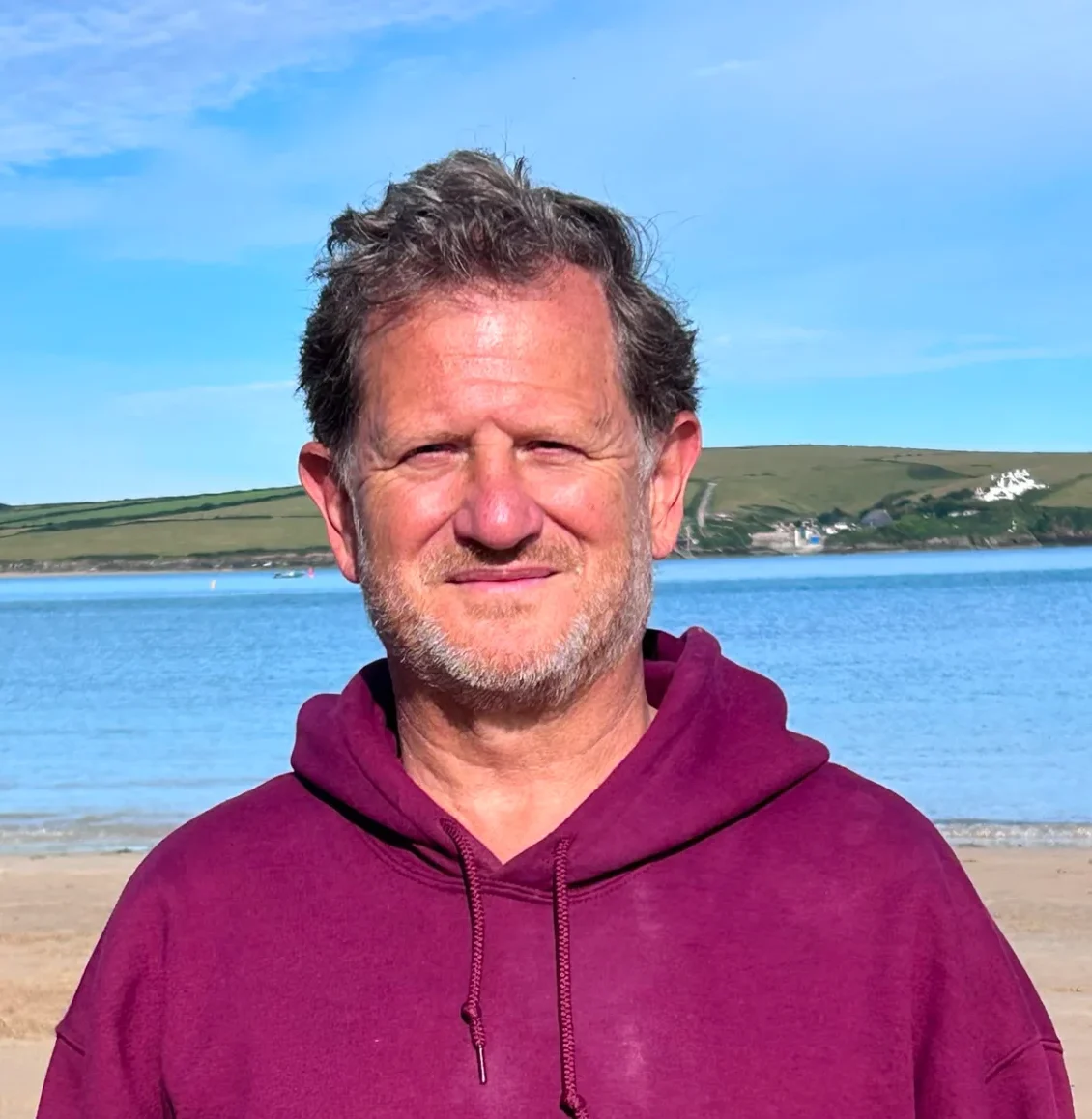
Family & Systemic Constellations Practitioner
After thirty five years of working in recruitment of high level executives, I have gained a deep understanding of what motivates us , inspires us and leads us to fulfilment. This work led me to a great interest in psychology and prompted my research and studies in personal development. I chose to specialise in family constellations because this method proved so effective for me and I have witnessed it as effective for many people. I trained at the Centre for Systemic Constellations in the UK completing the Foundation and Applied courses. Since then I have been practicing in London running workshops with two colleagues for three years. I previously worked in recruiting senior level executives for thirty five years. I have lived in the East Midlands most of my life. I studied Psychology & Neurology for two years at King's College London completing six modules of the MSc covering Psychological & Biological Foundations of Mental Health, Mindfulness, Psychosis and Techniques in Neuroscience.
Family & Systemic Constellations Practitioner
I receive regular professional supervision.
What issues can Systemic Constellations
help me with?
- Difficulties in your relationships with family — for example, being estranged or not speaking with a parent
- Struggling to form healthy, lasting relationships
- Feeling that you don't belong, are always left out, or are somehow in the wrong place
- Feeling stuck or unable to move forward in life
- Finding a way forward after a significant loss or traumatic experience
- Ongoing inner turmoil or unrest you can't quite explain
- Worries or recurring struggles around money
- Health issues, especially ones that persist without clear cause
- Repeating patterns you can't seem to break, such as self-sabotage or addictive behaviours
- A sense that you're not living up to your full potential
Origin of The Method
Bert Hellinger (1925-2019), a German psychotherapist, is the originator of
the method. He developed Systemic Constellations to map up and reveal
hidden dynamics and their impact on the individual and the group.
Prior to becoming a psychotherapist, Hellinger had a rich and varied history. He lived and worked amongst South Africa’s Zulus for 16 years as a catholic priest. He learnt their language and was particularly taken by their theory of Ubuntu, which values reconciliation through mutual respect.
From the field of modern psychotherapy, some of the most notable influences shaping his approach are the work of Ivan Boszormenyi-Nagy, Arthur Janov and Eric Berne, amongst many others.
Hellinger taught and transmitted his method throughout Europe, the United States, South America, Russia, China, the Middle East and Japan.
In the UK, Hellinger’s teaching and training gave birth to The Hellinger Institute of Britain (HIC), which has been succeeded by different organisations, such as CSC (Centre for Systemic Constellations), all of them having trained generations of Constellation facilitators.
I aim to hold each workshop as a supportive, safe, open and caring container. Respect for confidentiality is therefore a fundamental agreement for all participants.

My location
I work from a private space at Brixworth Village Hall, Holcot Rd, Brixworth, Northampton NN6 9BS, and see clients from the surrounding areas.
Contact me to find out more.
Fees & availability
Workshops involve 2 to 10 people and last three hours. I normally have two issue holders per workshop. Other participants can be representatives but this is not obligatory. Often individuals find that just being there or being a representative can be just as healing as being the issue holder.
Fees are £45 per person.
Either book through Eventbrite (Northampton Constellations ) or email me using secure contact form below.
Look forward to seeing you.
Freddie
Get in touch
Feel free to contact me if you have any questions.
You can also call me on +44 77686962 if you would prefer to leave a message or speak to me first. I am happy to discuss any queries or questions you may have prior to arranging an initial appointment.
All enquires are usually answered within 24 hours, and all contact is strictly confidential and uses secure phone and email services.
Frequently Asked Questions
No — and this surprises many people. A constellation needs remarkably little background to work. The facilitator will ask you a few brief questions, but you never have to share more than you're comfortable with.
Not at all. You can come purely as a representative or a witness. Many people attend this way first, to get a feel for the work — and most find it moving and insightful in its own right.
Never. You choose your level of participation at every stage, and you can decline to represent or step back at any point.
Yes, completely. Everyone in the workshop agrees at the start to keep whatever happens in the room private.
Constellation work complements counselling, therapy and medical care — it doesn't replace them. Many people find a constellation opens up rich material to take back to their one-to-one work, and therapists often refer clients for exactly that reason. If you're currently in therapy, you're welcome to mention it to your therapist first.
No. Constellations aren't a religion or a belief system, and you don't need to accept any particular theory. Healthy scepticism is welcome — just come with curiosity and see what you experience.
All sorts: family rifts and estrangements, difficulty forming lasting relationships, feeling stuck or unable to move forward, life after loss or trauma, repeating patterns that won't break, money worries, persistent health struggles, or simply a nagging sense that something isn't right.
That's no obstacle at all — in fact it's one of the strengths of this work. The people involved in your issue never attend; representatives stand in for them. Constellations regularly work with issues involving those who have died, are estranged, or were never known.
There's no ongoing commitment. A single constellation is often enough to shift something significant, and many people attend just once for a particular issue. Others return over time as new questions arise — it's entirely up to you.
Reactions vary — some people feel lighter straight away, others notice changes unfolding quietly over the following weeks. It's wise to keep the rest of the day gentle after a workshop, and you're welcome to contact me afterwards if anything needs airing.
Small enough to feel safe and personal — typically 4-10 people.